GST on Imported Goods and Online Purchases from Overseas
Learn when Australian GST applies to overseas purchases. Covers the $1,000 threshold changes, digital services, cross-border GST rules, and how to claim credits.
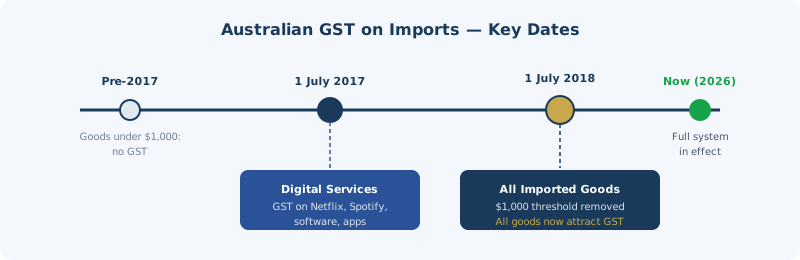
Quick Answer: Since 1 July 2018, all imported goods valued at $1,000 or under attract GST when sold to Australian consumers. Digital products and services from overseas have been subject to GST since 1 July 2017. Overseas sellers earning $75,000+ from Australian sales must register and collect Australian GST.
For most of Australia's GST history, overseas purchases under $1,000 arrived without GST. That changed in 2018. Whether you're a consumer buying from a US retailer or a business importing supplies from China, the GST rules now apply, and getting them right matters for BAS reporting.
The Old System (Before July 2018)
Before 1 July 2018, a low-value imports threshold meant that goods valued under $1,000 arriving in Australia were generally exempt from GST. This created a well-publicised competitive advantage for overseas online retailers over Australian businesses. A foreign seller could undercut a local price precisely because local sellers charged GST and foreign sellers didn't.
The change fixed this: from 1 July 2018, the $1,000 threshold was removed and GST applies to all imported goods sold to Australian consumers through the Vendor Registration Model.
How the Vendor Registration Model Works
Under the vendor registration model, overseas sellers with Australian sales exceeding $75,000 annually must:
1. Register for Australian GST
2. Charge GST at 10% on sales to Australian consumers
3. Collect and remit the GST to the ATO
This applies to overseas retailers, online marketplaces (Amazon, eBay, Etsy), and electronic distribution platforms. When you buy from Amazon.com.au or a third-party seller on Amazon's platform, the GST is collected by the platform (as the electronic distribution platform) rather than the individual seller.
For goods imported by Australian businesses for business use, the calculation and credit process differs from consumer purchases.
GST on Digital Products and Services
Since 1 July 2017, GST applies to digital products and services supplied by overseas businesses to Australian consumers. This covers:
- Streaming services (Netflix, Spotify, Disney+, Apple Music)
- Software subscriptions (Adobe, Microsoft 365, Salesforce)
- Cloud computing services
- E-books and digital publications
- Online gaming and in-app purchases
- Digital downloads (fonts, templates, stock photos)
When you subscribe to Spotify or Netflix in Australia, you're charged GST as part of the subscription price. The overseas provider collects it and remits it to the ATO. This is why Australian Netflix subscribers pay slightly more than, say, UK subscribers. The local GST is embedded in the pricing.
What Australian Businesses Need to Know
Business Purchases from Overseas Suppliers
If you're a GST-registered Australian business buying goods or services from an overseas supplier for business use, the GST treatment depends on how the overseas supplier handles it:
If the overseas supplier is registered for Australian GST and charges you GST: the GST appears on your invoice and you can claim it as an input tax credit on your BAS, subject to holding a valid tax invoice.
If the overseas supplier is not registered (small overseas seller below the $75,000 threshold): no GST is charged and there's nothing to claim.
For goods physically imported in larger quantities (commercial imports above $1,000): GST is collected at the border by Australian Border Force (ABF) as part of the customs clearance process. Your freight forwarder or customs broker handles this. The GST paid at import can be claimed as an input tax credit on your BAS.
Calculate the claimable credit using our Australian GST calculator: enter the GST-inclusive amount (as shown on your import entry documentation) and select Remove GST to confirm the credit amount.
The Reverse Charge for Business-to-Business
For B2B supplies of digital services from overseas (where an overseas supplier sells to an Australian business), a reverse charge mechanism may apply. Rather than the overseas supplier registering for Australian GST, the Australian business self-assesses and pays the GST directly. They can then claim it back as an input tax credit on the same BAS period, making it a wash administratively.
This is more relevant for enterprise-scale software and cloud services. For most small businesses paying standard subscription rates, the platform handles the GST and you simply check whether the invoice includes an Australian GST line.
Customs Duty vs GST
GST on imports is separate from customs duty. Customs duty is a separate tax on specific goods categories (clothing, alcohol, tobacco, vehicles, etc.) and is calculated on the customs value of the goods, not the GST-inclusive price.
The order of calculation at the Australian border:
1. Customs value (cost of goods + overseas transport + insurance)
2. Customs duty (if applicable) added to customs value
3. GST = 10% × (customs value + customs duty + transport costs to Australia + insurance)
For most imports, customs duty is $0 (many goods have zero duty under free trade agreements). GST is still payable.
Example: Office furniture imported from Malaysia at an FOB value of $5,000, with $500 shipping and insurance. Customs duty = $0 (furniture typically zero-rated under the ASEAN-Australia-New Zealand FTA). GST = 10% × ($5,000 + $500) = $550.
A GST-registered business importing for business use claims the $550 as a credit.
Common Questions From Business Owners
"I bought a laptop from Apple.com (US). Do I pay GST?" If you're buying in Australia through Apple's Australian store, yes. GST is included in the quoted price. If you technically ordered from the US store and had it shipped to Australia, it depends on the value and how it clears customs.
"My Chinese supplier doesn't charge GST on invoices. Can I still claim credits?" Only if they're registered for Australian GST and their invoice shows the ABN or equivalent. If not, there's no Australian GST in the price to claim. Check the invoice carefully.
"My SaaS tool is from the US and the invoice shows a 10% Australian GST charge. What do I do?" Claim it as an input tax credit on your BAS. The overseas provider is registered for Australian GST and has charged you correctly. Keep the invoice as documentation.
For any imported transaction where you're unsure, our Australian GST calculator shows the GST component of any GST-inclusive amount. For a more complete picture of how GST credits work, see our guide on claiming input tax credits. If you're importing regularly for a business and dealing with customs brokers, a tax agent familiar with cross-border GST is worth engaging. The rules are nuanced and the credits can be substantial.
Visit the ATO website and search for "GST on imported goods" or review their guide on GST-free items in Australia for context on what arrives with and without GST.
Key Takeaways
Since 1 July 2018, all imported goods sold to Australian consumers attract GST regardless of value. The old $1,000 low-value threshold no longer provides an exemption. Digital products and services from overseas have been subject to Australian GST since 1 July 2017.
Overseas sellers earning $75,000 or more from Australian sales must register for Australian GST, charge it at 10%, and remit it to the ATO. Most large platforms (Amazon, Spotify, Adobe) handle this automatically.
For GST-registered Australian businesses, imports from overseas suppliers registered for Australian GST can be claimed as input tax credits on your BAS. Imports cleared through Australian Border Force on commercial entries above $1,000 are also creditable.
Use our GST calculator to confirm the credit amount on any GST-inclusive import invoice. Our guide on claiming input tax credits covers the documentation requirements in detail.